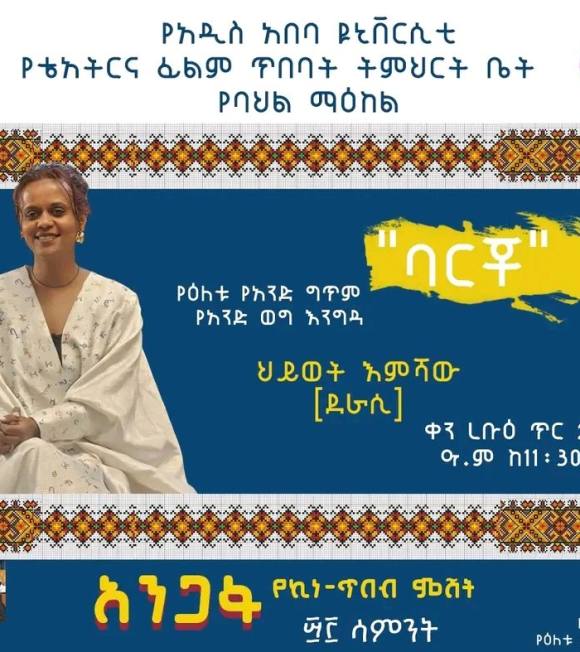
The Cultural Center at Addis Ababa University (AAU) hosted its 43rd special edition of its popular regular arts evening, bringing together art lovers, students, and literary enthusiasts from across the city.
The event took place on Wednesday, January 28, 2026 (Tir 20, 2018 E.C.), starting at 5:30 PM local time (11:30 Local Time) at the university's Cultural Center. Celebrated Ethiopian author and social commentator Hiwot Emishaw featured as the guest of honor, sharing her professional insights, creative writing journey, and literary experiences with the audience.
Hiwot Emishaw is well known in Ethiopian literary circles for her insightful storytelling, keen social observation, and popular short stories and prose collections—including acclaimed works such as Baricho (ባርቾ), Fikfaki (ፍቅፋቂ), Mata Mata (ማታ ማታ), and Ziwaziwe (ዥዋዥዌ). Her writings often tackle nuanced social topics, human relationships, and cultural commentary with humor and deep observational skill.
The Addis Ababa University Cultural Center's regular art evenings serve as an essential platform for artistic expression, featuring poetry readings, musical performances, drama, and intellectual discussions aimed at fostering creative dialogue among young writers and established artists.
The Addis Ababa University (AAU) Cultural Center occupies a distinct and vital position in Ethiopian arts and literary history. Rather than acting merely as a university venue, it has served as an intellectual incubator, a platform for creative resistance, and an essential bridge between academic thought and popular culture.
During the mid-to-late 20th century—particularly under the reign of Emperor Haile Selassie and into the post-1974 revolution era—the university became the epicenter of modern Ethiopian creative expression. Renowned literary icons, dramatists, and poets such as Tsegaye Gebre-Medhin, Mengistu Lemma, and Girma Beyene frequented university forums and stages. The Cultural Center provided a crucial space where experimental Amharic plays, satirical sketches, and groundbreaking poetry were first premiered and debated.
The AAU Cultural Center is far more than a physical auditorium; it is an enduring cultural institution that helped shape modern Amharic literature, launched the careers of generations of Ethiopian artists, and maintained a vibrant forum for dialogue and artistic freedom throughout Ethiopia's modern history.