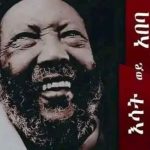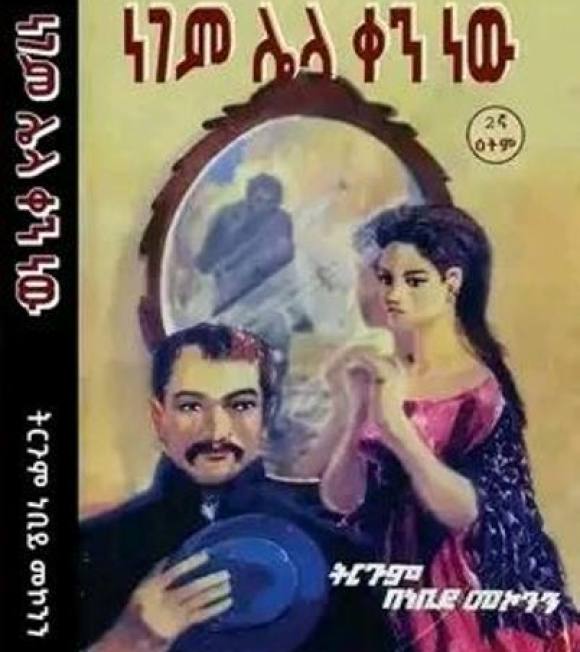
"ነገም ሌላ ቀን ነው" (Negem Lela Qen New / Tomorrow is Another Day) is widely considered one of the most extraordinary literary feats in modern Ethiopian history. Translated by the legendary poet, journalist, and intellectual Nebiy Mekonnen (1956–2024), the book is an Amharic translation of Margaret Mitchell's 1936 American classic Gone with the Wind.
However, the book's monumental status in Ethiopian culture stems not just from its literary value, but from the unbelievable, heroic story of its creation.
The most defining aspect of Negem Lela Qen New is that it was completely translated while Nebiy Mekonnen was a political prisoner. During the late 1970s and 1980s, Nebiy was a member of the Ethiopian People's Revolutionary Party (EPRP) opposing the brutal Marxist military junta known as the Derg. He was arrested and held without trial for nearly eight years (from 1977/78 to 1985) in the notorious Maekelawi prison. Prisoners were strictly forbidden from possessing pens, paper, or any reading materials. Having somehow acquired a copy of Gone with the Wind, Nebiy managed to sneak in writing materials. Over the years, Nebiy meticulously hand-translated the massive, 1,000+ page epic by writing in tiny, micro-script Amharic letters on approximately 3,000 individual scraps of cigarette paper and aluminum wrappers. Piece by piece, these tiny cigarette papers were rolled up and systematically smuggled out of the prison inside laundry bundles and through visiting family members, running the constant risk of execution if caught by prison guards.
The Amharic title, "Negem Lela Qen New", translates directly to "Tomorrow is Another Day"—which is the famous, iconic closing line spoken by Scarlett O'Hara at the end of Gone with the Wind. For Nebiy and his fellow political prisoners, this phrase was not just a quote from a novel; it was a daily, survivalist mantra of hope that the brutal military dictatorship would one day end.
When Nebiy was finally released in 1985, he reassembled the massive jigsaw puzzle of cigarette papers. However, the book's journey to the public was far from smooth:
When it was ready for print, the Derg regime's strict state censorship board intercepted it. Because the novel depicted a civil war, rebellion, and the collapse of an old society, the state viewed it as politically dangerous. The censors heavily cut out Nebiy's custom introduction and chopped out massive philosophical chunks of the translation before allowing a limited run. Shortly after, it was banned from reprinting.
For over 30 years, the book remained out of print and became a rare collector's item. Finally, in September 2022 (Nehase 2014 E.C.), an expanded, fully restored, unabridged multi-volume edition was officially published. This definitive version re-integrated the long-lost introduction and censored chapters, fulfilling Nebiy's lifelong dream before his passing in July 2024.
Amharic literary critics heavily praise Nebiy's work. Instead of a rigid, literal translation, he brilliantly adapted the complex 19th-century American Southern idioms, racial dynamics, and battlefield terminology into rich, poetic, and culturally relatable Amharic prose.
Upon its release, it stood as one of the longest and most physically expansive books ever published in the Amharic language.
In global literary circles, Negem Lela Qen New is cited alongside works by figures like Aleksandr Solzhenitsyn as an ultimate testament to the triumph of human intellect and creative defiance over institutional totalitarianism.
For those interested in the profound depth of his wider literary contributions, you can watch Nebiy Mekonnen's Poetic Performance on Tobiya, which showcases the incredible command of the Amharic language and artistic gravitas that he brought to this historic translation.