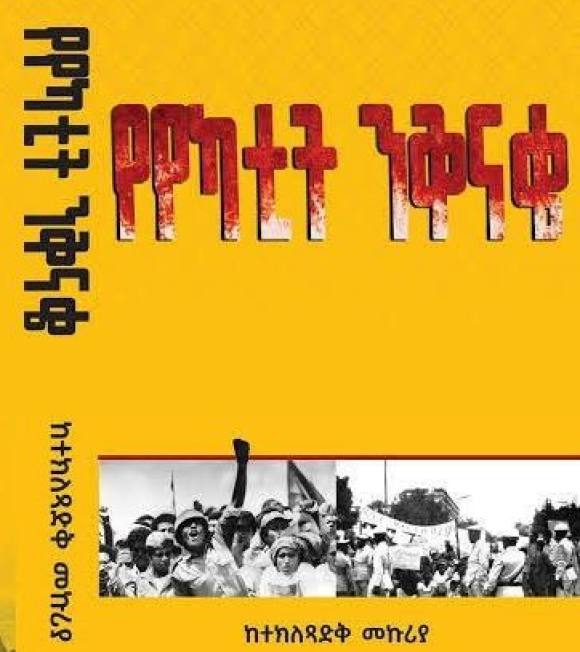
Posthumous Publication of The Yekatit Movement. A major new historical work titled "The Yekatit Movement" (የየካቲት ንቅናቄ), authored by the late veteran scholar and prominent historian Tekletsadiq Mekuria, has officially been published. The manuscript, which was completed before the historian's death, was brought to publication through the dedicated efforts and initiative of his family members. According to reporting by Event Addis Media, the book is structured into six major parts and 18 chapters, offering an in-depth, rigorous historical accounting of one of the most pivotal eras in modern Ethiopian history.
The book concentrates primarily on the Yekatit Revolution—the revolutionary uprising of February 1974 (Yekatit in the Ethiopian calendar)—which ultimately brought an end to Emperor Haile Selassie I's imperial reign and centuries of monarchical rule in Ethiopia. Tekletsadiq Mekuria systematically examines the catalyst factors, systemic weaknesses, and social discontent that built up within the feudal and political structures, driving the Ethiopian public, students, military units, and civil society toward mass revolution in February 1974.
Tekletsadiq Mekuria (1913–2000) was one of Ethiopia's most distinguished self-taught historians, diplomats, and former Ministers of Education and Culture. He spent decades authoring foundational Ethiopian history texts covering broad eras ranging from ancient Nubia and Axum to the reigns of Emperor Tewodros II, Emperor Yohannes IV, Emperor Menelik II, and the Gragn Ahmed invasions.
Following Ethiopia's liberation in 1941, Tekletsadiq entered public service, holding key administrative and diplomatic posts under Emperor Haile Selassie I and during the early Derg administration. HeServed as Secretary in the Ministry of Education and Fine Arts, where he helped formulate early national curricula. Appointed Director General of the National Archives and Library of Ethiopia (Wemezekir) with the rank of Assistant Minister. Served as Secretary of the Ethiopian Embassy in Paris, Consul to Jerusalem, and Ethiopian Ambassador to Yugoslavia (Belgrade). Served as Minister of Education and Culture until his retirement in the mid-1970s. The volume is divided into 6 overarching parts and 18 detailed chapters, providing a sequential analysis of the economic, social, and political dynamics leading up to the 1974 revolution. Following his passing, his family preserved his unpublished writings and worked to publish this historical analysis to complete his extensive bibliography on Ethiopian history.