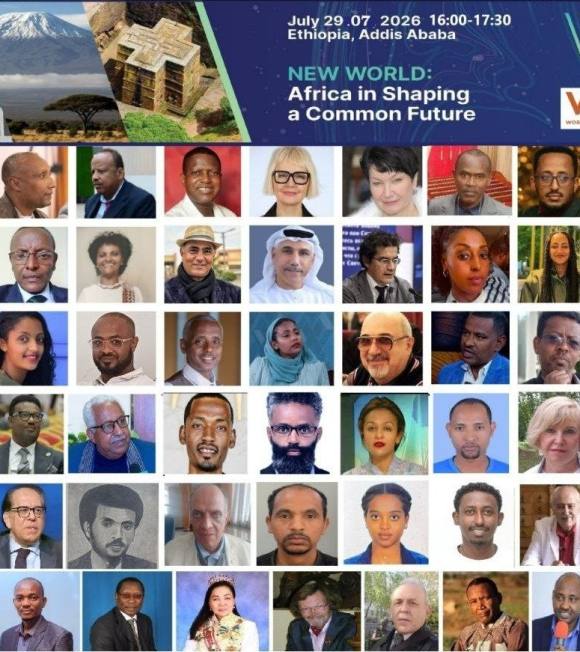
Connecting Ethiopian Voices to the Globe: World Authors Organization Holds Summit in Addis Ababa. An international literary summit organized by the World Authors Organization was held in Addis Ababa at the Elilly International Hotel. The gathering brought together prominent Ethiopian authors, literary scholars, language experts, and editorial veterans to discuss the global standing of African literature and strengthen international ties.
The assembly operated under the overarching theme: "Africa in Shaping a Common Future." Discussions centered on the evolving landscape of contemporary African literature, storytelling paradigms, and how African narratives can actively participate in global cultural discourse.
The conference featured contributions from leading academic and theatrical voices in Ethiopia,
Dr. Abiy Daniel, who is an Associate Professor at Addis Ababa University who has extensively researched African literature and Ethiosemitic socio-linguistics, delivered a keynote paper focusing on structural perspectives in African prose and narrative evolution.
Ayalneh Mulatu, a celebrated Ethiopian playwright, theater director, and cultural commentator, served as one of the featured paper presenters, offering insights into theatrical adaptation, storytelling traditions, and stagecraft. Margaret A, the President of the World Authors Organization, traveled to Addis Ababa specifically to preside over the summit, signaling a strong international commitment to integrating Ethiopian authors into global literary networks.
Beyond individual writers and academics, the event drew participation from key publishing and editorial entities. Notably, Ewketu Ejigu, founder of Tewedaj Media and Communication—a prominent Ethiopian media firm engaged in book production and biographical documentation—attended the sessions alongside members of his editorial team.
A primary objective of holding this international conference in Addis Ababa was to build sustainable pathways for local authors, expanding international publishing, translation, and distribution networks for Ethiopian writers, and promoting higher standards in editorial practices, copyright protection, and literary criticism. Collaborative Platforms: Fostering cross-border dialogues between African writers and international literary institutions.