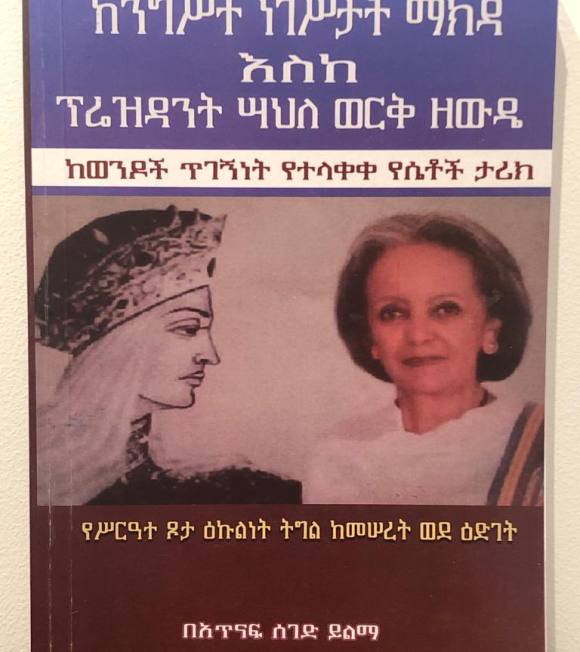
Book Launch Announcement 🔥
The historical book titled "From Queen of Queens Makeda to President Sahle-Work Zewde: Women's History Freed from Dependence on Men" written by Atnafseged Yilma will be launched this coming Hamle 16, 2014 E.C. at Hager Fikir Theatre starting at 3:00 morning time.
Book Title: "From Queen of Queens Makeda to President Sahle-Work Zewde: Women's History Freed from Dependence on Men"
(ከንግሥተ ነገሥታት ማክዳ እስከ ፕሬዚዳንት ሣህለወርቅ ዘውዴ - ከወንዶች ጥገኝነት የተላቀቀ የሴቶች ታሪክ)
Author: Atnafseged Yilma (አጥናፍሰገድ ይልማ)
Event Date: Hamle 16, 2014 Ethiopian Calendar (July 23, 2022 Gregorian Calendar)
Start Time: 3:00 Morning Local Ethiopian Time (9:00 AM EAT)
Venue: Hager Fikir Theatre (ሀገር ፍቅር ቴአትር), Piazza, Addis Ababa
This work serves as a comprehensive historical and biographical exploration of women's political leadership, statecraft, and executive governance throughout Ethiopian history. It traces the arc of female authority in Ethiopia across three millennia—from ancient monarchical times to the modern democratic state.
Overview & Scope
The book examines how women in Ethiopia have held and exercised supreme political authority across different eras. Rather than treating female leadership as a modern anomaly, the work frames women's statecraft as a continuous thread running through Ethiopian political history.
The title anchors this historical narrative between two milestone female leaders:
Empress Makeda (Queen of Sheba): Representing ancient antiquity and the foundational legend of Ethiopian statehood.
President Sahle-Work Zewde: Representing the modern era as Ethiopia's first female head of state (2018–2024).
Key Historical Figures Featured
The historical timeline in the book highlights major female monarchs, regents, diplomats, and leaders who shaped Ethiopian political history:
| Leader | Period / Era | Key Role & Significance |
| Queen Makeda (Queen of Sheba) | ~10th Century BC | Legendary sovereign of the Sabaean/Axumite traditions and mother of King Menelik I. |
| Queen Gudit (Yodit) | ~10th Century AD | Powerful queen who disrupted the Aksumite dynasty and ruled over northern Ethiopia. |
| Queen Bati del Wambara | 16th Century | Strategic political player and wife of Imam Ahmad ibn Ibrahim al-Ghazi (Ahmad Gragn) during the Ethiopian–Adal war. |
| Empress Mentewab (Berhan Mogasa) | 18th Century | Powerful regent during the Gondarine period who co-ruled and influenced state policy. |
| Empress Taytu Betul | Late 19th–Early 20th C. | Strategist at the Battle of Adwa (1896) and co-ruler alongside Emperor Menelik II. |
| Empress Zewditu I | 1916–1930 | First internationally recognized female head of state of modern Ethiopia as Empress regnant. |
| President Sahle-Work Zewde | 2018–2024 | Veteran UN diplomat and first female President of the Federal Democratic Republic of Ethiopia. |
Core Themes & Analysis
Continuity of Female Sovereignty: The book demonstrates that Ethiopian tradition includes deep-seated precedent for female executive authority and political negotiation.
Evolution of Leadership Roles: It contrasts dynastic legitimacy (lineage and royal marriage) with modern institutional governance (diplomacy, international law, and constitutional politics).
Military Strategy & Statecraft: It emphasizes that historical Ethiopian queens were not mere figureheads; they frequently led military strategy (e.g., Empress Taytu at Adwa) and conducted foreign relations.
Gender & Public Life: It provides context on the social structures that allowed certain women to wield supreme power despite broader patriarchal societal norms.