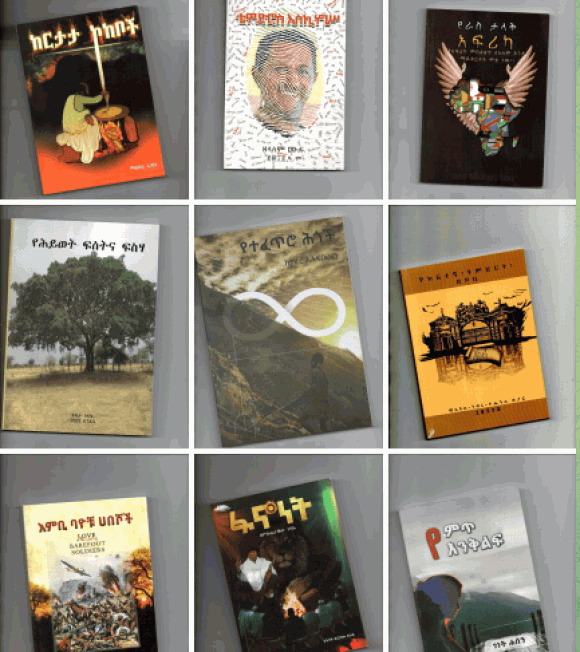
1. "ካርታታ ጎጆዎች" (Kartata Gojjoch) — Tilted Huts
Author: Yohannes Beyene (ዮሐንስ በየነ)
Cover Art: Features a traditional rural landscape showing a person cooking or tending to a fire inside a dimly lit sanctuary under a tree canopy. Theme: Typically indicates a fictional or poetic exploration of Ethiopian rural life, traditional struggles, and societal resilience. What it's about: This book explores the realities of Ethiopian rural life, traditional family values, and the silent resilience of everyday people living away from urban centers. It delves into themes of perseverance, community bonds, and the socio-economic challenges faced by rural households.
2. "ቴዎድሮስ አስከሬኑ" (Tewodros Askirenu) — Tewodros's Remains
Author: Zelalem Bekele (ዘላለም በቀለ)
Cover Art: A distinct portrait stylized with horizontal typographic lines superimposed on historical text. Theme: A biographical or historical analysis focused on Emperor Tewodros II of Ethiopia, likely diving into the history surrounding his death at Magdala and the legacy of his reign. What it's about: A deep historical dive tracking the legacy, final days, and historical debates surrounding the death of Emperor Tewodros II at the Battle of Magdala. The title "The Remains" points directly toward the lingering geopolitical and historical discussions surrounding the repatriation of artifacts, remains, and the psychological impact of his reign on modern Ethiopian statehood.
3. "የራሷ ታላቅ አፍሪካ" (Yeraswa Talaq Africa) — Her Own Great Africa
Author: Melesse Wondimu Gebre (መለሰ ወንድሙ ገብሬ)
Cover Art: A map of Africa filled with continental national flags, framed by large protective wings. Theme: A political or historical text exploring pan-African unity, African sovereignty, and the role of the Organization of African Unity (OAU) / African Union (AU). What it's about: An analytical piece on African sovereignty, unity, and self-determination. The author explores how Africa can map its own path toward development and regional strength without relying heavily on external global powers, calling back to the historic foundations laid by the Organization of African Unity (OAU) and the African Union (AU).
4. "የሕይወት ፍሰትና ፍልስፍና" (Yehivot Fisetena Filsifina) — The Flow and Philosophy of Life
Authors: Tadesse Gelan & Solomon Tewodros (ታደሰ ገላን / ሰሎሞን ቴዎድሮስ)
Cover Art: A serene, large indigenous Warka (fig) tree standing in an open field. Theme: Philosophical and psychological reflections exploring personal growth, human nature, and life's journey using natural Ethiopian symbols. What it's about: A collaborative philosophical reflection that utilizes classic Ethiopian metaphors—like the deeply rooted Warka tree—to discuss human nature, inner peace, and personal growth. The book explores how individuals can navigate the chaotic "flow" of modern life while staying grounded in strong personal philosophies.
5. "የተፈጥሮ ሕጎች" (Yeteftro Higoch) — The Laws of Nature
Author: Dr. Zelalem Assefa (ዶ/ር ዘላለም አሰፋ)
Cover Art: An infinity symbol ($\infty$) hovering over rolling hills and a solitary traveler walking toward the horizon. Theme: Metaphysical, philosophical, or spiritual nonfiction discussing universal governance, personal balance, and the unwritten laws binding humanity and nature together. What it's about: Dr. Zelalem looks into the unwritten, immutable universal laws that govern human existence, consciousness, and moral balance. It bridges spiritual concepts with practical philosophy, arguing that true human success comes from aligning personal actions with the broader cosmic and natural order.
6. "የከፍተኛ ትምህርት በኢትዮጵያ" (Yekeftegna Timhirt be Ethiopia) — Higher Education in Ethiopia
Cover Art: A graphic rendition of the iconic historical entrance gate of Addis Ababa University (AAU) on an amber background. Theme: An academic, historical, or policy-oriented analysis outlining the history, evolution, challenges, and structural changes of the Ethiopian higher education system. What it's about: An institutional study documenting the evolution, structural updates, and historic milestones of the higher education system in Ethiopia. It addresses the challenges of academic quality, accessibility, and the transition of local universities from elite training centers to mass educational institutions.
7. "አምባ ባሻ ሐበሻ" / Love and the Barefoot Soldiers
Author: Frances Vieta
Cover Art: An action-heavy, historical battle painting featuring cavalry, aircraft, and rugged terrain.
Theme: A translated or bilingual historical account/novel covering military conflict in Ethiopia, paying tribute to the everyday "barefoot soldiers" who defended the nation throughout history. What it's about: A multi-layered narrative detailing the lives, sacrifices, and personal stories of the ordinary "barefoot soldiers" who fought to protect Ethiopia's borders during foreign incursions. Interwoven with historical milestones is a story of love and human connection amidst wartime upheaval.
8. "ፋኖነት" (Fanonet) — The Essence of Fano
Cover Art: A powerful imagery combo featuring a roaring lion overlooking individuals gathered tightly around a glowing night campfire.
What it's about: A deep exploration of the concept of Fanonet—the volunteer warrior ethos deeply rooted in northern Ethiopian history. The book unpacks the historical role of the Fano as an emergency community defense force, their code of honor, and how this legacy shapes contemporary social movements. Theme: A deep dive into the historical ethos, cultural values, and sociopolitical movement of the Fano—the volunteer warrior tradition rooted in Ethiopian defense and community protection.
9. "የሞት እንቅልፍ" (Yemot Enqilf) — The Sleep of Death
Author: Gintu Qasim (ግንቱ ቃሲም)
Cover Art: A silhouette of a reflective individual overlooking a foggy, quiet lake with a wooden pier leading into the unknown. Theme: A psychological thriller, a piece of deep dramatic fiction, or a spiritual text probing themes of mortality, the subconscious, and existential reckoning.
What it's about: A slow-burn psychological narrative or reflective text dealing with profound human experiences: grief, mortality, identity crises, and existential questions. The book uses a dark, atmospheric tone to explore what happens to the human psyche when confronting major personal tragedies or life-altering turning points.